Let me show you around
LoHi
The bottom of the Highlands hill, on the bluff above I-25 with downtown right across the highway. Newer attached homes and condos mix with older houses, a footbridge carries 16th Street over the interstate, and a giant milk can marks the main corner.
About 80% of homes here were built before 1940, median 1,430 sq ft. What to check on houses like these
Live listings on compass.com. Send me any address and I’ll tell you what to look for.
Winter sun
Which driveways stay iced in December and which back yards keep the afternoon. Worth knowing before you fall for a house.
See how the winter sun falls on LoHi (opens in new tab)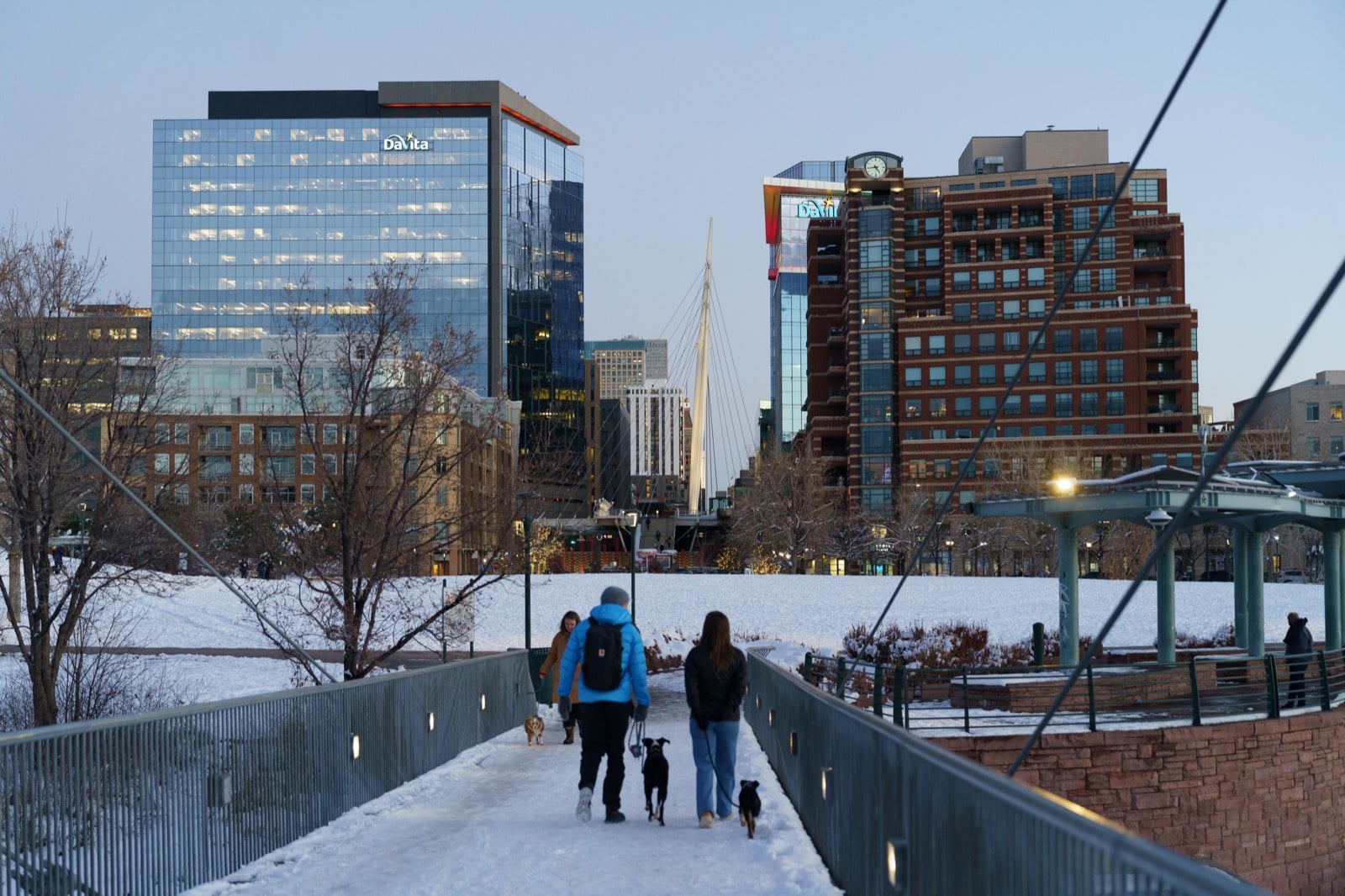
Housing stock: Denver Assessor open data, 2026-09-19.
Living in LoHi
LoHi is short for Lower Highland. It isn't an official neighborhood: the city's map shows only Highland, its official name for the Highlands, and LoHi is the bottom corner of it, on the bluff where the hill drops toward I-25 and the South Platte. The streets around 15th, 16th and Boulder are what most people mean, with downtown sitting just across the interstate.
How a mortuary gave it a name
For most of the 20th century this was just the low end of the Highlands. In the early 2000s, developer Paul Tamburello redeveloped the old Olinger mortuary complex, and the Big Red F group moved its restaurant Lola in from Platte Park. Tamburello and Lola's owner, Dave Query, started calling the complex the LoHi Marketplace. Within about a month a real estate ad had borrowed the name, then other ads and businesses did too, and the number of restaurants and bars around it doubled in a few years, then tripled.
Tamburello added Little Man Ice Cream to the marketplace. It sells out of a 28-foot-tall milk can at 2620 16th St., the easiest thing in LoHi to give directions by. He also redeveloped a second Olinger building, which is where Linger has served international small plates since 2011. The mortuary's old rooftop neon still glows, and lit up it reads "Linger Eatuaries." The roof bar is built into a 1975 GMC RV.
What you'll be buying
Lower Highland has dense mixed-use zoning, and newer attached housing sits between the older houses: townhomes, condos and rows of units. It was one of the places where slot homes went up, rows of units turned sideways to the street. In 2018 the city put a moratorium on new slot homes and proposed rules that make the units nearest the street face it, so check the current zoning for any lot you're eyeing. Expect HOA dues on many of these, and read the association documents before you get attached to a rooftop deck, so you know who pays when a shared wall or roof needs work.
The Highland Bridge to downtown
The Highland Bridge is a 325-foot pedestrian bridge over I-25 between Central Street and Platte Street. It opened December 16, 2006, cost $5.2 million, and was the third of three footbridges stringing the 16th Street Mall out to the Highlands. If you work downtown and want to skip the car, this bridge is the reason to look at the blocks closest to Central Street.
32nd Avenue's Italian corner
Bar Dough, at 2227 W. 32nd Ave., has been making pizza, pasta and small plates since 2015. It was Westword's 2023 editor's pick for best Italian restaurant in Denver.
FAQ
Is LoHi an official Denver neighborhood?
No. The city's map shows Highland, and LoHi is a name for its lower corner near I-25 and the river.
Where did the name LoHi come from?
From the LoHi Marketplace, the name given to the redeveloped Olinger mortuary complex in the early 2000s. A real estate ad picked it up within about a month, and it spread from there.
Can you walk from LoHi to downtown?
Yes. The Highland Bridge crosses I-25 between Central Street and Platte Street, extending the 16th Street Mall.
What kind of homes are in LoHi?
Older houses mixed with a lot of newer attached homes, townhomes and condos, including slot homes. Many attached units come with HOA dues and association rules.
What is the big milk can?
It's Little Man Ice Cream, a 28-foot-tall milk can at 2620 16th St., added to the LoHi Marketplace by the developer who redeveloped the mortuary.