Let me show you around
Montclair
An 1880s suburb that Denver swallowed in 1903, running from Colfax to 6th Avenue between Holly and Quebec. Richthofen Castle and the old Molkery still stand on 12th Avenue, and most of the houses on its tree-heavy streets went up between 1940 and 1959.
About 71% of homes here were built between 1940 and 1959, median 1,350 sq ft. What to check on houses like these
Live listings on compass.com. Send me any address and I’ll tell you what to look for.
Winter sun
Which driveways stay iced in December and which back yards keep the afternoon. Worth knowing before you fall for a house.
See how the winter sun falls on Montclair (opens in new tab)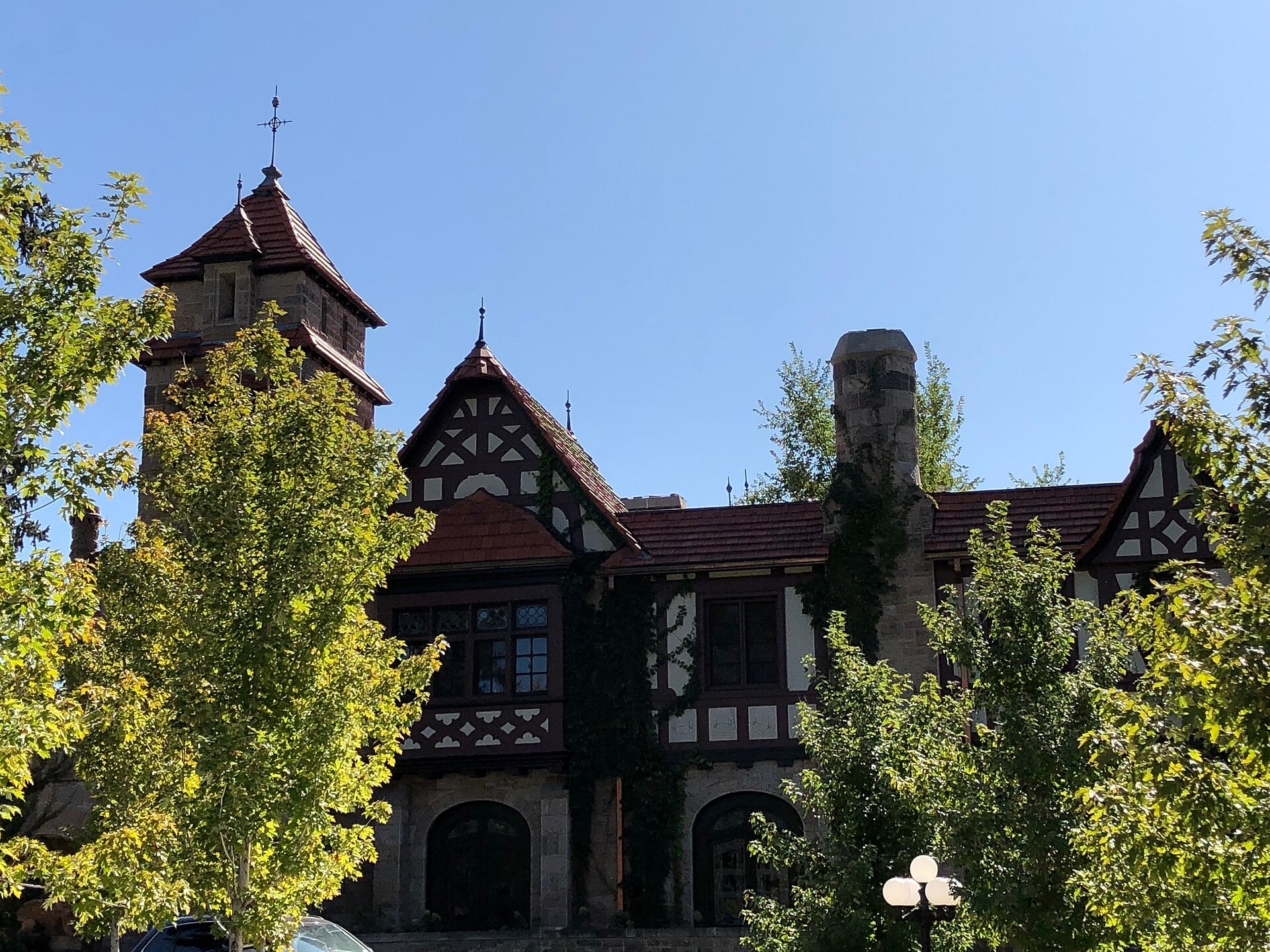
Housing stock: Denver Assessor open data, 2026-09-19.
Living in Montclair
Montclair is the east Denver neighborhood between Colfax Avenue and 6th Avenue, from Holly Street east to Quebec Street. Hale sits across Holly to the west, and South Park Hill is on the far side of Colfax. The western blocks, out to Monaco Street Parkway, are the part most people call Mayfair, and that stretch has its own page.
A baron's suburb, with rules
The Montclair Town and Improvement Company started the suburb in 1885. One founder, Matthias P. Cochrane, named it after his old hometown of Montclair, New Jersey. The other, Baron Walter von Richthofen, was an uncle of the World War I flying ace Manfred von Richthofen. The rules were strict from the start. Lots were twice Denver's standard size, houses had to be at least three stories of brick or stone, and saloons were banned outright.
Montclair incorporated in 1888, and the Panic of 1893 stopped construction cold. Richthofen had pitched it as a health retreat, but he died in 1898. Montclair fought annexation all the way to the state Supreme Court, lost, and became part of Denver in 1903. Mayor Robert Speer then extended Richthofen's parkways and added trees and fountains.
Richthofen Castle and the Molkery
Two of the baron's buildings are still standing on 12th Avenue. Richthofen Castle, at 7020 E. 12th Ave., is a 35-room mansion from 1887, designed by Alexander Cazin in a Gothic and Tudor Revival style. It was enlarged in 1910 and 1924, and it's been on the National Register of Historic Places since 1975.
A short walk west, at 6820 E. 12th Ave., is the Molkery, German for "milk house." It opened on September 15, 1888, as a restaurant, hotel and sanitarium offering a milk cure to tuberculosis patients, and it looks like a three-story Swiss chalet with a deep veranda. The city took the building over after annexation, and in 1910 it became Denver's first community center. A restoration finished in 2004 put back the cupola, chimneys and grand staircase. Now called the Montclair Civic Building, it's a Denver Landmark that rents out for parties and events.
Big lots, and mostly mid-century houses
Big lots and old shade trees are what Montclair is known for. The original Victorians and Queen Annes are still around, along with "TB houses" built for tuberculosis patients, and the 20th century filled in with bungalows, cottages, Tudor Revivals and ranches. Denver Assessor records count 1,935 detached houses in the Montclair statistical neighborhood. Only 16 percent were built before 1940, while 71 percent date from 1940 to 1959 and 10 percent from 2000 or later. The median house is about 1,350 square feet. So the odds favor a mid-century house on a generous lot, and the 1880s and 1890s houses are the rare find.
In 1975, residents and the City Council made the central part of Montclair a historic district, the fifth landmark district the city designated. Inside it, exterior projects that need a building or zoning permit go through Landmark Preservation design review. That includes roofing, windows, additions, garages, solar panels and fences. The district covers only part of the neighborhood, so look a house up on the city's map before you plan work on the outside.
Montclair Park and Kittredge Park
Montclair Park takes up 3.1 acres, including the Molkery's grounds, and it's on the National Register. Kittredge Park is a small one with a large playground.
Colfax and the buses on it
Colfax is the commercial edge. Mesob, at 1422 Poplar St. just south of it, is a family-owned Ethiopian restaurant known for its vegetable dishes: lentil sambusas, a veggie combo platter and a long run of vegetable and legume stews.
RTD's 15 and 15L run along Colfax. Bus-only center lanes between Broadway and Colorado Boulevard opened on September 27, 2026, and full bus rapid transit is planned for late 2027 or early 2028. If you want a bus at the end of the block, look at the streets nearest Colfax.
FAQ
Where is Montclair in Denver?
East Denver, between Colfax Avenue and 6th Avenue, from Holly Street east to Quebec Street. Hale is to the west and South Park Hill is across Colfax.
Who was Montclair named for?
Founder Matthias P. Cochrane named it after his hometown of Montclair, New Jersey. His partner was Baron Walter von Richthofen, an uncle of the World War I ace.
Can you visit the Molkery?
The building, now the Montclair Civic Building at 6820 E. 12th Ave., rents out for parties and events. It sits on the grounds of Montclair Park.
How old are the houses in Montclair?
Most are mid-century: 71 percent were built from 1940 to 1959. Only 16 percent predate 1940, and 10 percent are from 2000 or later.
Is Montclair a historic district?
The central part of the neighborhood has been a historic district since 1975. Exterior work there that needs a permit, like roofing, windows, additions or fences, goes through Landmark Preservation design review.
Is Mayfair part of Montclair?
Mayfair's blocks east of Holly Street fall inside Montclair. Its western edge reaches into Hale, and it has its own page.