Let me show you around
Marston
Denver's far southwest corner, wrapped around Marston Lake, a Denver Water reservoir. Split-levels and 1980s and 1990s cul-de-sacs fill most streets, Grant Ranch sits on an old governor's ranch, and Wadsworth Boulevard handles the errands.
Nearly every house here was built between 1960 and 1999, median 1,730 sq ft. What to check on houses like these
Live listings on compass.com. Send me any address and I’ll tell you what to look for.
Winter sun
Which driveways stay iced in December and which back yards keep the afternoon. Worth knowing before you fall for a house.
See how the winter sun falls on Marston (opens in new tab)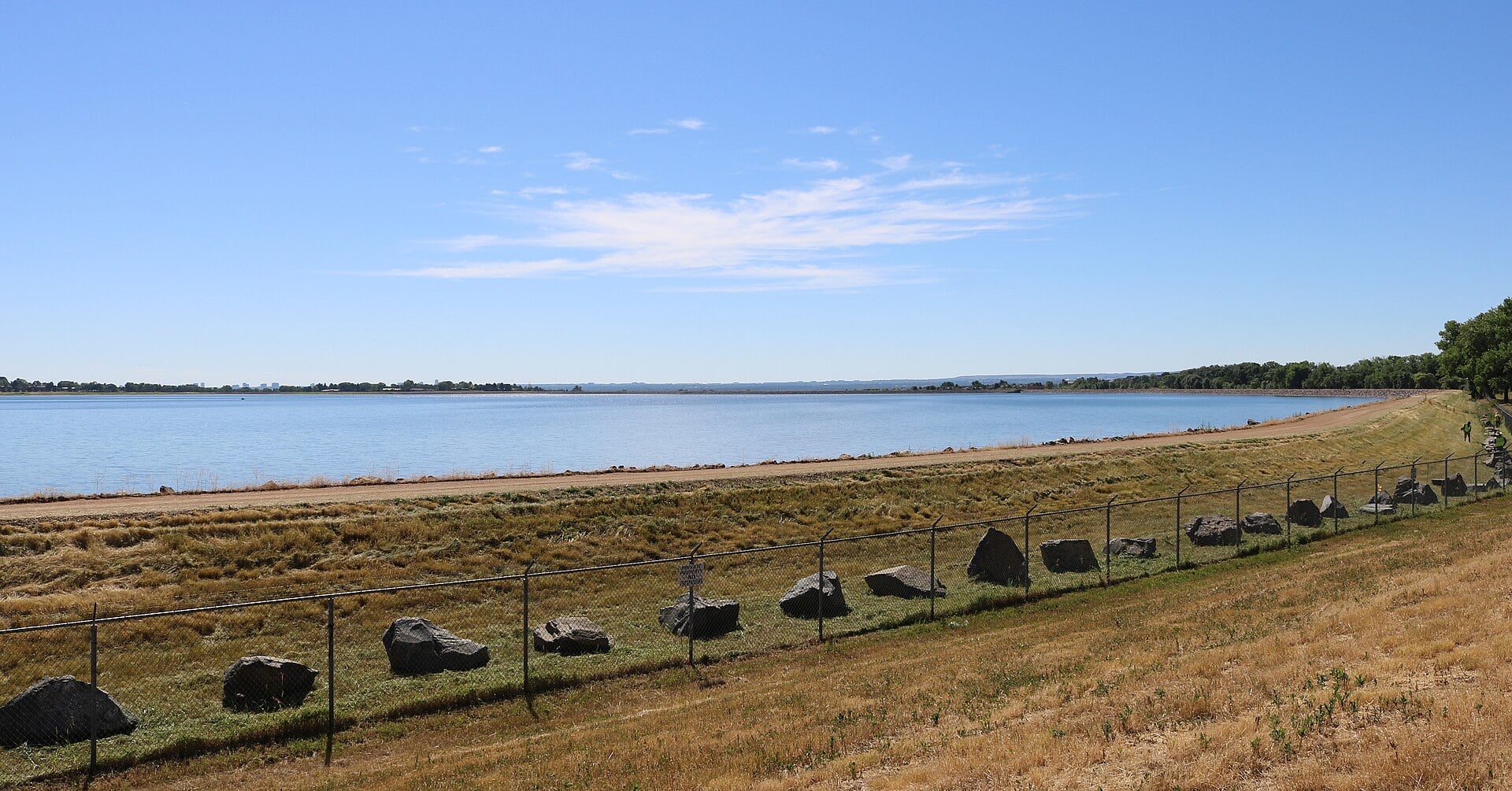
Housing stock: Denver Assessor open data, 2026-09-19.
Living in Marston
Marston is as far south and west as Denver goes. Its outline is odd: roughly Quincy Avenue on the north, Bowles Avenue on the south, Kipling on the west and Sheridan on the east, with a big piece of the middle that belongs to someone else. The reservoir it's named for takes up a lot of the map, and the neighborhood reaches so deep into Jefferson County that the lake nearly cuts it off from the rest of the city.
Two farmers and a reservoir
The name goes back to John Marston, one of the farmers who worked this ground before the suburbs came. Bowles Lake is named for another farmer, Joseph Bowles, and the little town of Bow Mar, incorporated in 1958, took its name from both lakes. Bow Mar is its own town, so don't confuse an address there with a Marston one.
Marston Lake was finished in 1902. Denver Water owns it, fills it with South Platte River water, and sends it to the Marston treatment plant beside the shore. It's drinking water, so swimming, fishing and boating are all off limits. The lake is for looking at, and it's a good spot for birding. If you were picturing a paddleboard off the back fence, plan on the Southwest Recreation Center pool instead.
The houses
Marston has about 2,100 detached houses, and 97 percent were built between 1960 and 1999. Almost none are older, and only about 3 percent went up after 2000. The middle-sized house runs about 1,730 square feet. Split-levels are common, and a lot of streets end in cul-de-sacs lined with 1980s and 1990s houses.
Detached houses are only part of it. Single-family homes and apartment buildings come in a nearly even split. If you'd rather not back out onto a through street, the cul-de-sac pockets off the main roads are where to look.
Grant Ranch and its own water district
Grant Ranch sits on land Governor James Benton Grant bought around 1878. The family raised Hereford cattle there, sent a stallion to the 1936 Kentucky Derby, and during World War II ran a breeding center for the Army's Remount Service.
Here's the practical part. The Grant Water and Sanitation District covers the ground south of Belleview between Wadsworth and Sheridan, and about 295 acres of it are inside Denver. In that stretch the district, not the city, supplies water and sewer service. Denver handles only the stormwater. If a house is in Grant Ranch, ask the seller for recent water and sewer bills so you know who you'll be paying.
Golf, the rec center and a few places to eat
Raccoon Creek Golf Course, at 7301 W. Bowles, is built on the old Grant family ranch and takes public tee times, with a Farmhouse Restaurant in the clubhouse. Denver's Southwest Recreation Center, at 9200 W. Saratoga Place near Belleview and Wadsworth, has an outdoor pool, a gym, pickleball and a weight room. Clement Park and the Columbine Library are close by on the Jefferson County side.
The 49th Food & Spirits has served Alaska-themed food from a strip mall at 4550 S. Kipling since about 2014, and its elk-and-beef burgers get most of the attention. Down at Wadsworth and Bowles, just across the line in Littleton, The Lake House Kitchen & Tavern is a waterfront restaurant with a patio. Grocery stores, gas stations and chain restaurants line South Wadsworth.
Getting around and what's changing
Wadsworth, Kipling, Belleview, Quincy and Bowles are the main roads. The Wagon Creek Trail follows the Bowles Lateral ditch through the neighborhood toward Garrison and Union Park.
Wadsworth Boulevard still sits under the old Former Chapter 59 zoning, and the Far Southwest Area Plan, adopted unanimously by City Council on December 8, 2025, calls for moving it into a mixed-use district. Expect new proposals along that corridor. Bus service in Marston may also decrease, so count on a car for most trips.
FAQ
Is Marston in Denver or Littleton?
It's in Denver, though it reaches deep into Jefferson County and Littleton is all around it. The nearby town of Bow Mar is separate.
Can you swim or fish in Marston Lake?
No. It's a Denver Water drinking water reservoir, so swimming, fishing and boating aren't allowed. It is a good spot for birding.
How old are the houses in Marston?
About 97 percent of detached houses were built between 1960 and 1999, with only about 3 percent after 2000. The middle-sized house is about 1,730 square feet.
Who provides water and sewer in Grant Ranch?
The Grant Water and Sanitation District, for about 295 acres inside Denver. The city handles only stormwater there.
Are there apartments in Marston?
Yes. Single-family homes and apartment buildings come in a nearly even split.
What's planned for Wadsworth Boulevard?
The Far Southwest Area Plan, adopted in December 2025, calls for moving it from Former Chapter 59 zoning into a mixed-use district.
Is there light rail in Marston?
No rail line is named on this page, and bus service in Marston may decrease. Most trips are by car.