Let me show you around
Washington Park
Mostly brick houses from 1900 to 1940, with much bigger new builds going up between them, around a 165-acre park with two lakes and a 1913 boathouse. Old South Gaylord Street is the one-block shopping strip.
About 64% of homes here were built before 1940, median 2,020 sq ft. What to check on houses like these
Live listings on compass.com. Send me any address and I’ll tell you what to look for.
Winter sun
Which driveways stay iced in December and which back yards keep the afternoon. Worth knowing before you fall for a house.
See how the winter sun falls on Washington Park (opens in new tab)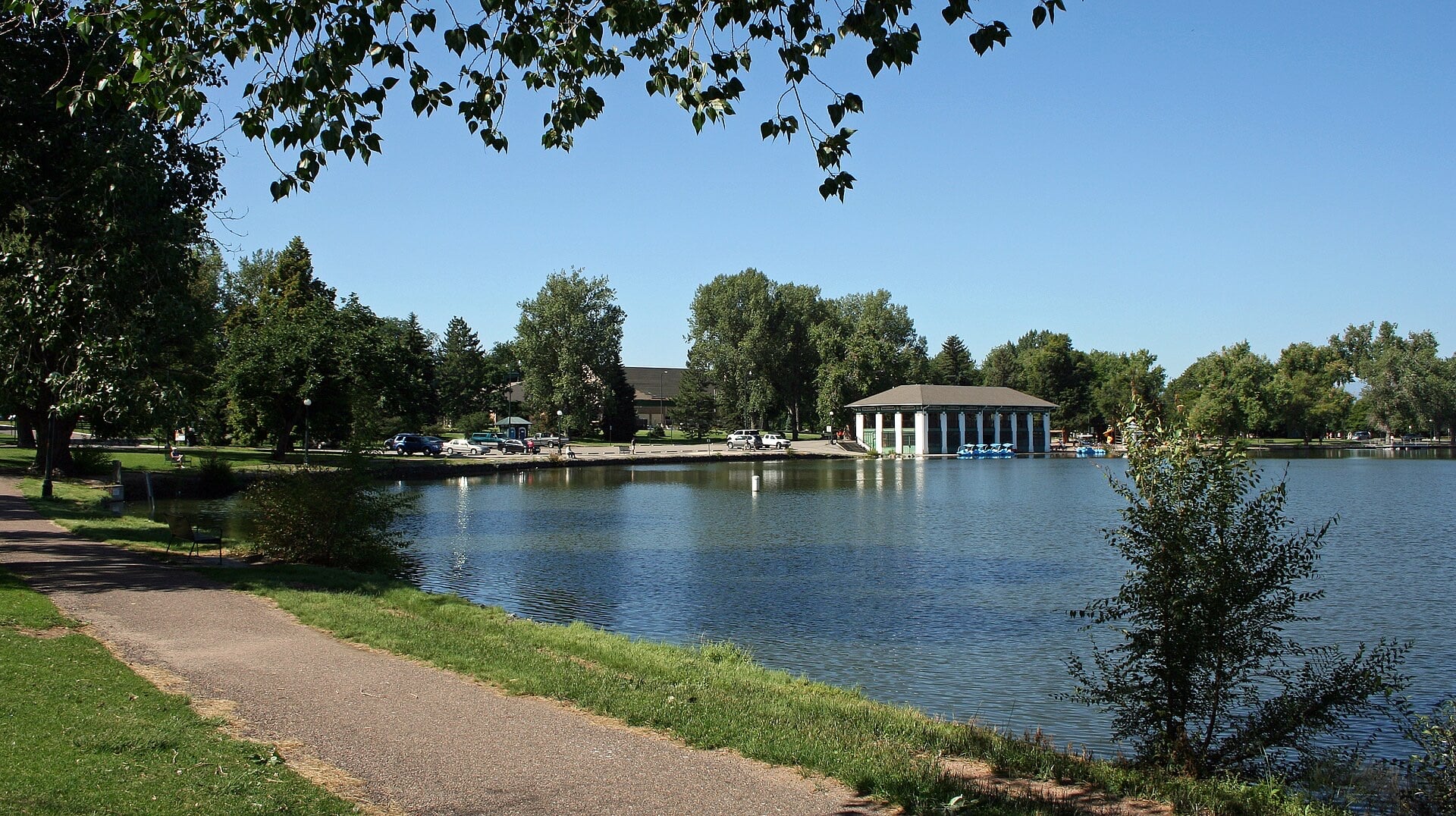
Housing stock: Denver Assessor open data, 2026-09-19.
Living in Washington Park
Washington Park, which nearly everyone shortens to Wash Park, is the city neighborhood that runs from Downing Street east to University Boulevard, and from Cherry Creek south to I-25. The park it's named for fills the west side, between Downing and Franklin Street, from Virginia Avenue down to Louisiana Avenue. Washington Park West is its own neighborhood across Downing, and Belcaro, with Bonnie Brae inside it, is across University.
A ditch, a lake, then a park
Water came before houses here. Smith's Ditch, Denver's first irrigation canal, was finished in 1867, and Smith Lake formed in a hollow along it. The land joined the Town of South Denver in 1886, and Denver annexed it in the 1890s. The city started condemning land south of the lake for a park in 1897, Reinhard Schuetze drew the plan, and the park reached its present size in 1904. Development picked up once the park was there. Schuetze's plan added Grasmere Lake and the Lily Pond, all fed by the ditch, which is now called City Ditch.
Brick bungalows, and bigger houses between them
Most of the houses are brick and went up between 1900 and 1940. Bungalows and Craftsman houses are common, and flagstone porches are a regular feature. A few bigger early houses stand out, like the Causey-Sterne House at 1190 South Franklin, built in 1913 for $14,000.
Developers have popped the top or scraped plenty of originals for much larger new houses. If you're buying an older house to keep, look hard at the lots on either side, because a much taller neighbor can change how much sun your yard gets.
Tearing down isn't always quick, either. In 2025 someone other than the owners applied to landmark a Wash Park house, which sent its planned demolition into city mediation until the Landmark Preservation Commission denied the application on a 3-3 vote. If you're buying to build new, leave room in your timeline for that kind of fight.
Lakes, gardens and the boathouse
The park covers 165 acres, about a mile long and a quarter-mile wide. It has Smith Lake and Grasmere Lake, ten tennis courts, a lawn bowling green and a big meadow used for volleyball and soccer. The flower garden is the largest in Denver, and one section copies Martha Washington's garden at Mount Vernon. The whole park went on the National Register of Historic Places in 1986.
Jules Jacques Benois Benedict designed the boathouse on Smith Lake in 1913, and the city renovated it in 2012. It rents for events from April 15 to October 15. The recreation center at 701 South Franklin has a lap pool, a gym, a weight room and a pickleball court.
Old South Gaylord Street
Old South Gaylord is a single block of shops and restaurants between Mississippi and Tennessee Avenues, about six blocks east of the park. The brick building at 1076-1078 opened in 1913 as the Washington Park Bakery, with the baker living upstairs and streetcar tracks in the dirt street out front.
The Cookery at Myrtle Hill, at 1020 South Gaylord, is a breakfast and lunch spot known for its quiche of the day, rated 4.6 out of 5 stars on Google. Reivers Bar & Grill, across the street at 1085, does brunch, lunch and dinner and holds 4.5 out of 5 stars on Google. Smaller clusters of shops sit along Alameda Avenue and at old streetcar-stop corners.
Getting around
Downing Street and University Boulevard run north and south along the edges, and I-25 is the southern line. Two light rail stations serve the south end, Louisiana-Pearl and University of Denver, both served by RTD's E and T lines. Louisiana-Pearl also has RTD buses 11 and 12. If you want to take the train, the blocks near I-25 are the ones closest to it.
FAQ
What are the boundaries of Washington Park?
Downing Street on the west, University Boulevard on the east, Cherry Creek on the north and I-25 on the south. Washington Park West, across Downing, is a separate neighborhood.
What kind of houses are in Wash Park?
Mostly brick houses built between 1900 and 1940, many of them bungalows and Craftsman houses. Developers have popped the top or scraped plenty of originals for much larger new houses.
Can you tear down a house in Wash Park?
Often, but it isn't guaranteed to be quick. In 2025 an application from someone other than the owners to landmark a house sent one planned demolition into city mediation before the Landmark Preservation Commission denied it on a 3-3 vote.
How big is the park?
165 acres, about a mile long and a quarter-mile wide, with Smith Lake, Grasmere Lake, ten tennis courts, a recreation center and the largest flower garden in Denver.
Where do you eat and shop?
Old South Gaylord Street, one block between Mississippi and Tennessee Avenues, has the Cookery at Myrtle Hill and Reivers Bar & Grill. There are smaller shop pockets along Alameda Avenue.
Is there light rail near Washington Park?
Yes. The Louisiana-Pearl and University of Denver stations along I-25 serve the south end, both served by RTD's E and T lines.