Let me show you around
Villa Park
Mostly single-family houses on hilly West Denver blocks split by three creek gulches, with townhomes and apartments mixed in. Paco Sánchez Park and the Lakewood Gulch path run along the north edge, and the W Line stops three times.
About 60% of homes here were built between 1940 and 1959, median 910 sq ft. What to check on houses like these
Live listings on compass.com. Send me any address and I’ll tell you what to look for.
Winter sun
Which driveways stay iced in December and which back yards keep the afternoon. Worth knowing before you fall for a house.
See how the winter sun falls on Villa Park (opens in new tab)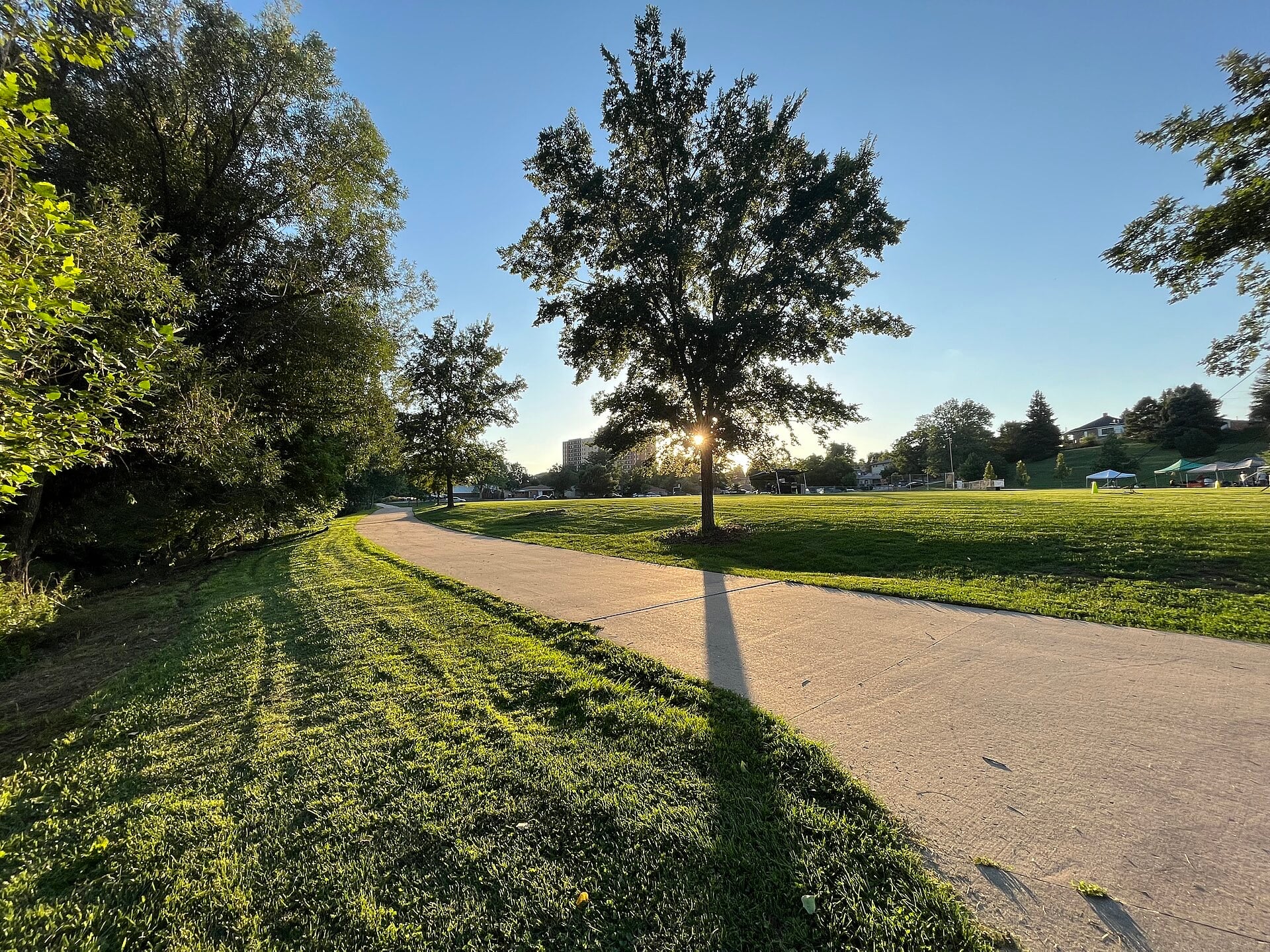
Housing stock: Denver Assessor open data, 2026-09-19.
Living in Villa Park
Villa Park is in West Denver, two to three miles west of downtown. Federal Boulevard is the east edge, Sheridan Boulevard the west edge, the 6th Avenue freeway the south edge and Lakewood Gulch the north edge, with West Colfax on the far side of the gulch and Barnum across 6th. A small notch pokes west of Sheridan between 10th Avenue and the gulch. Sheridan mostly marks the line between Denver and Jefferson County, so Lakewood starts across the street.
A resort plan that never got built
In 1871 developers bought more than 1,000 acres covering today's Villa Park and Barnum. Frederick Law Olmsted drew up plans with artificial lakes and ravines, and none of it was built. Judge Hiram Bond's group ran a cattle brokerage on the land until 1878, then sold it to Helen Barnum Hurd Buchtel, a daughter of circus owner P.T. Barnum.
The ground held things back. Gulches and hills made it slow to build on, and the 1900 census counted only about 66 buildings. Single-family building crept along into the 1950s, by which point most of the neighborhood was in place.
Hills, gulches and the houses between them
Three small creeks cut through: Lakewood Gulch, Dry Gulch and Weir Gulch, with Lakewood and Dry meeting near 10th Avenue and Osceola Street. The land rises toward the west, so these streets climb and drop more than most of Denver. From the high ground, especially Lakewood/Dry Gulch Park, you can see downtown and the Rocky Mountains.
The gulches break up the grid too. Only a few streets bridge them, mainly 10th Avenue, Perry Street and Knox Court, so drive your actual commute before you fall for a block.
Single-family houses make up most of what's here, with townhomes, apartment buildings and a few larger complexes mixed in. Most of the multi-unit building came in the 1960s and 1970s, mainly on the west side toward Sheridan. If you want a detached house, expect to look further from Sheridan.
Paco Sánchez Park and the gulch trails
Martinez, Paco Sánchez, Lakewood/Dry Gulch and Barnum North parks all follow the creeks, and several bike and walking paths run along them.
Paco Sánchez Park connects to Knox station. It's named for the man who started Denver's first Spanish-language radio station, and the park's redesign carries a broadcasting theme, with a microphone play tower at the top of the hill.
Lakewood Gulch drains to the South Platte, and its last half-mile, a concrete channel near Decatur Street east of Federal, occasionally floods. For a house that backs onto a gulch, pull the flood map before you offer.
Three stops on the W Line
RTD's W Line light rail opened on April 26, 2013, built on and alongside Lakewood Gulch. Villa Park has three stops: Knox, Perry and Sheridan, the last tucked under Sheridan Boulevard. Knox and Perry are walk-up stations with no park-and-ride. Sheridan has an 800-space garage on the west side of the boulevard, across the gulch in Lakewood, and a connection to the 51 bus. The line runs 12.1 miles from Union Station to Golden, with trains every 7.5 minutes at peak between Denver and Federal Center.
Shops and restaurants mostly line Federal and Sheridan, with smaller strips along 6th Avenue, 10th Avenue and Knox Court. El Zarape, at Federal and 10th Avenue, is a family-run spot known for carnitas and breakfast burritos, and on weekend mornings a cook works big pots of carnitas and chicharrones out front. On the Sheridan side, Los Carboncitos at 722 Sheridan Blvd. cooks in an open kitchen, and 5280 points people to its build-your-own alambre.
Zoning under the West Area Plan
Denver City Council adopted the West Area Plan, which covers Villa Park and five neighboring areas, on March 28, 2023, and approved the rezoning that put it into effect on July 8, 2024. The plan steers denser building and ground-floor shops toward the main corridors and transit stops. Inside Villa Park, it moved two Habitat for Humanity lots on North Meade Street from single-unit to two-unit zoning. Near Federal, Sheridan or a station, look up the zoning on the blocks around a house, since that's where new building is aimed.
FAQ
Where exactly is Villa Park?
West Denver, two to three miles west of downtown. It runs from Federal Boulevard west to Sheridan Boulevard and from the 6th Avenue freeway north to Lakewood Gulch.
How old are the houses?
Building was slow after 1900 and most of the neighborhood was in place by the 1950s. More multi-unit buildings came in the 1960s and 1970s, mainly on the west side.
Is it mostly houses or apartments?
Mostly single-family houses, with townhomes, apartment buildings and a few larger complexes.
Can you take light rail downtown?
Yes. The W Line stops at Knox, Perry and Sheridan stations and runs to Union Station, with trains every 7.5 minutes at peak between Denver and Federal Center. Only Sheridan has a park-and-ride garage.
What's at Paco Sánchez Park?
A park that connects to Knox station, with a broadcasting theme and a microphone play tower. It honors the founder of Denver's first Spanish-language radio station.
Is flooding a concern near the gulches?
Lakewood Gulch drains to the South Platte, and the last half-mile of Lakewood Gulch, a concrete channel near Decatur Street, occasionally floods. Pull the flood map for any house that backs onto a gulch.
Is the zoning changing?
The West Area Plan, adopted in 2023 with rezoning in 2024, aims denser building at the main corridors and transit stops. Two lots on North Meade Street moved from single-unit to two-unit zoning.