Let me show you around
Globeville
Small frame and brick houses, most of them up before 1940, on a tight grid that I-25 and I-70 cut into four pieces. Washington Street is the old main street, Argo Park dates to 1880, and the 41st & Fox rail stop sits on the west edge.
About 83% of homes here were built before 1940, median 870 sq ft. What to check on houses like these
Live listings on compass.com. Send me any address and I’ll tell you what to look for.
Winter sun
Which driveways stay iced in December and which back yards keep the afternoon. Worth knowing before you fall for a house.
See how the winter sun falls on Globeville (opens in new tab)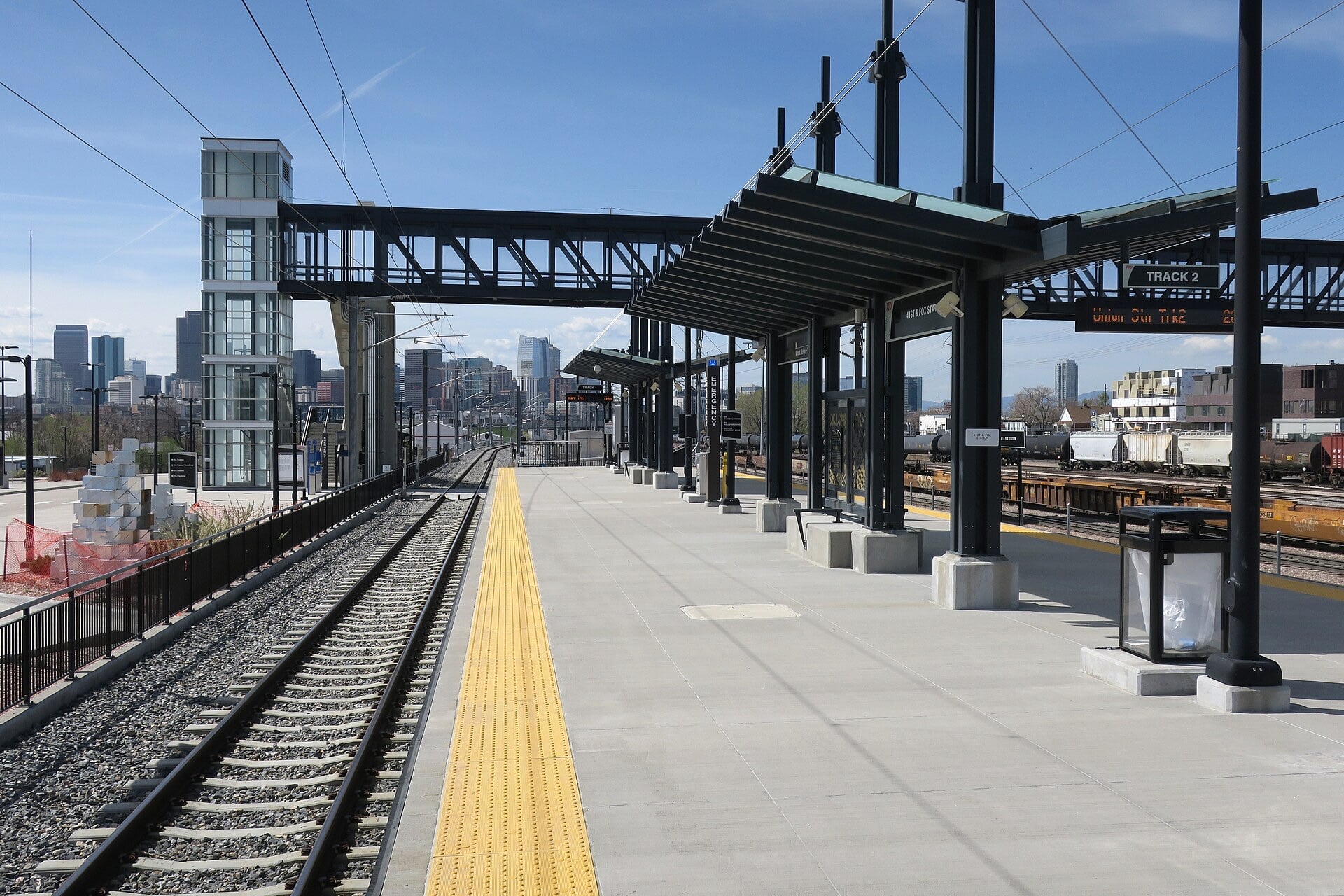
Housing stock: Denver Assessor open data, 2026-09-19.
Living in Globeville
Globeville sits on the north-central edge of Denver, where I-25 and I-70 cross. The South Platte River wraps the east and south sides, with Elyria-Swansea across the water. Inca Street is the west edge, and the city limit, mostly 52nd Avenue, caps the north. The two freeways split it into four quadrants.
A smelter town that joined Denver in 1902
Smelters came first: Argo in 1878, then Holden's in 1885, which two Denver bankers bought in 1889 and renamed the Globe Smelter and Refining Company. The town around it incorporated in 1891 and took the name. Globeville agreed to join Denver in 1902 on promises of better water, lower taxes and a streetcar line, though the streetcar didn't arrive until 1908.
Gable fronts, bungalows and the Globeville dormer
The houses are old and mostly small. More than 65 percent of buildings were standing by 1940. Front-gable houses are the most common shape, about a third of the homes surveyed, with bungalows next. Anything built before 1920 tends to be a plain house with no clear style. The 1920s and 1930s brought brick bungalows with simple Craftsman trim. Look up at the hipped roofs, too: many carry a tiny double-sided gable dormer.
Some of the older homes were built without foundations. If you're looking at a pre-1920 house, get an early read on what it sits on, since that can drive the cost of a remodel.
Garden Place and Old Globeville
Two pockets hold the most intact blocks, and both are eligible for the National Register. Garden Place sits south of I-70 and east of I-25, roughly north of 43rd Avenue and west of Pearl Street, and 161 of its 201 parcels count as contributing. Old Globeville is north of I-70, between Broadway and Washington Street and south of 48th Avenue, where brick bungalows and frame shotguns share blocks with later ranches. The 1902 St. Joseph's church at 517 E. 46th Ave. is on the National Register.
West of I-25, the old town of Argo mostly gave way to warehouses. A few houses hang on between West 43rd and 44th Avenues and Delaware and Cherokee Streets.
Crossing the freeways, and the train at 41st & Fox
Washington Street is the old main street, with 45th Avenue the cross street in the south half and 47th Avenue in the north. Only Washington and Lincoln Streets cross I-70. Every other north-south street stops at 46th Avenue, and the east and west halves meet by frontage roads along I-25. If you'd be crossing the neighborhood every day, drive that route before you settle on a block.
RTD's 41st & Fox station opened in 2019 as the only B and G Line stop inside Denver, with a 500-space park-and-ride and a pedestrian bridge west to Sunnyside. The Colorado Front Range Trail follows the South Platte's west bank.
Argo Park, Globe Hall and Fort Greene
Argo Park began as a recreation ground in 1880, and a pool and changing rooms were added in the 1930s. Globe Hall, at 4483 Logan St., is a small music venue in a renovated meeting hall that opened in 2015, and its barbecue is counted among the best in Denver. Fort Greene took over an 1880s former dance hall at 321 E. 45th Ave. in 2015 and was Westword's Best Bar for Good Vibes in 2024.
Fox Park and the smelter cleanup
Next to the station, Fox Park is turning 41 acres of the old Denver Post printing plant into a new district. Its first building, a garage for a World Trade Center Denver campus, topped out in March 2026, and plans call for more than 1,000 homes, a Virgin Hotel, offices and 14 acres of parks. Expect construction noise around 41st and Fox for years.
The smelters also left metals in the soil. The EPA named the area a Superfund site in 1989, and a class-action settlement had ASARCO pay $38 million to clean arsenic, cadmium and lead out of yards. Ask the seller for any soil testing or cleanup records on a lot.
FAQ
Where is Globeville?
On Denver's north-central edge, where I-25 and I-70 meet. The South Platte River runs along the east and south sides, rail yards near Inca Street mark the west, and the city limit, mostly 52nd Avenue, is the north edge.
How old are the houses?
More than 65 percent of buildings were standing by 1940. Front-gable houses are the most common, with bungalows next, many of them brick from the 1920s and 1930s.
Is Globeville a historic district?
Garden Place and Old Globeville are both considered eligible for the National Register. They hold the most intact older blocks.
Is there a train station?
Yes. The 41st & Fox station on the B and G Lines has a 500-space park-and-ride and a pedestrian bridge to Sunnyside.
What is Fox Park?
A 41-acre redevelopment of the old Denver Post printing plant next to the 41st & Fox station, planned for more than 1,000 homes, a Virgin Hotel, offices and 14 acres of parks.
Was the soil contaminated?
Yes. The EPA named the area a Superfund site in 1989, and ASARCO paid $38 million to clean arsenic, cadmium and lead from yards. Ask for soil testing or cleanup records on any lot.
How hard is it to get across I-70?
Only Washington and Lincoln Streets cross it. Every other north-south street stops at 46th Avenue.