Let me show you around
City Park West
Victorians in the Wyman district, prewar houses mixed with small apartment buildings, and a hospital campus in the middle, between Downing and York north of Colfax. 17th Avenue is the restaurant strip, and City Park is just across York.
Nearly every house here was built before 1940, median 1,860 sq ft. What to check on houses like these
Live listings on compass.com. Send me any address and I’ll tell you what to look for.
Winter sun
Which driveways stay iced in December and which back yards keep the afternoon. Worth knowing before you fall for a house.
See how the winter sun falls on City Park West (opens in new tab)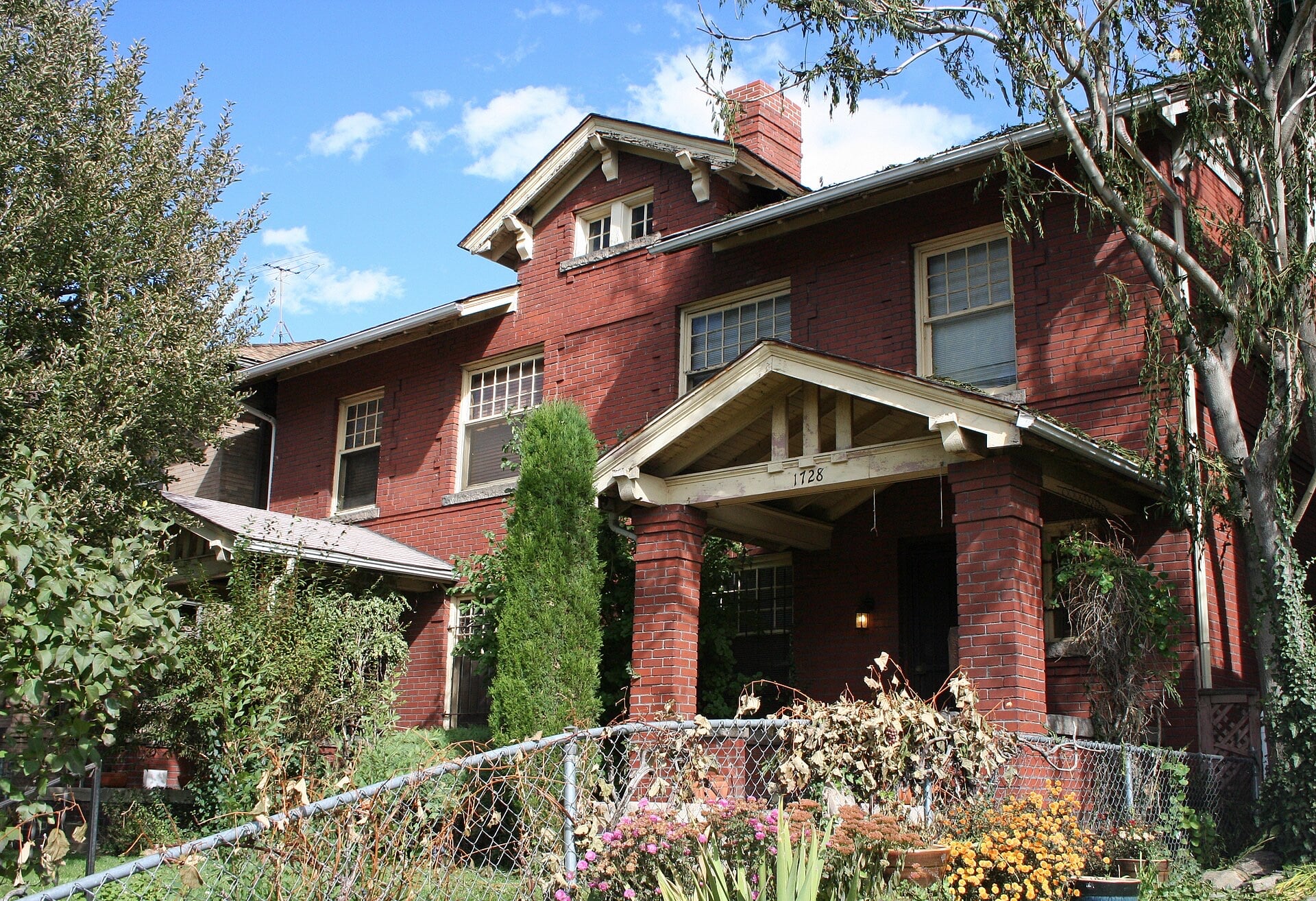
Housing stock: Denver Assessor open data, 2026-09-19.
Living in City Park West
City Park West runs from Downing Street east to York Street, between Colfax Avenue on the south and 23rd Avenue on the north. City Park itself is across York. This side is the older grid leading up to it, with a big medical campus in the middle. Some businesses along 17th Avenue go by Uptown, so you'll see both names.
Race Street and the Wyman blocks
The stretch from Colfax up to 17th Avenue, between Franklin Street and York, is the north end of the Wyman Historic District, which Denver designated in 1993. The land was platted in 1882, and most of the houses went up by 1896 in Victorian styles, many of them designed by William Lang, Frank Edbrooke or Robert Roeschlaub. Post-Victorian houses and early modern apartment buildings filled in later.
Race Street has the showpieces. Castle Marne, at 1572 Race, is a William Lang mansion from around 1890 that runs as a bed and breakfast. The Delos Allen Chappell House at 1555 Race dates to about 1895.
Exterior work that needs a building or zoning permit inside the district goes to Denver's Landmark Preservation staff for design review. Window and door replacement, roofing, solar, fences, garages, additions and ADUs are all on that list. If you buy a Victorian here and plan to change the outside, build the approval into your schedule before you set a contractor's start date.
Prewar houses on the rest of the grid
Of the 514 detached single-family houses in the neighborhood, 96% were built before 1940. The median is 1,860 square feet, and only about 3% went up after 2000. Small apartment buildings are mixed in among the houses.
The 1700 block of Gilpin Street has National Register listings, including the Pierce T. Smith House at 1751 Gilpin and the Manuella C. Walters Duplex at 1728 and 1732. The Smith House at 1801 York went up between 1902 and 1905 and became a Denver landmark in 1971. With about 500 detached houses in the whole neighborhood, the field is small, so have your financing lined up before one you like comes along.
Saint Joseph and the hospital blocks
Saint Joseph Hospital moved to 18th Avenue and Humboldt Street in 1876, on land donated by territorial governor William Gilpin. Its current building, finished in 2014, stands at 1375 E. 19th Avenue, and the hospital is part of Intermountain Health now. Presbyterian/St. Luke's Medical Center is here too, along with other medical offices. Hospitals and offices take up much of the middle of the neighborhood, so expect medical buildings along that stretch rather than houses.
Eating along 17th Avenue
17th Avenue runs from Broadway to City Park, nicknamed Restaurant Row, and it's lined with cafes, pubs and restaurants, most with patios. Weathervane Cafe, at 1725 E. 17th, has served coffee and breakfast out of an 1896 carriage house since 2012. It's open daily from 8 to 3, makes its own syrups for its lattes, and made the Denver Gazette's October 2025 list of Denver coffee shops worth a trip. Vine Street Pub & Brewery, at 1700 Vine, is the Denver pub of Boulder's Mountain Sun group, known for burgers, wings and its own beer, brewed on site since 2012. It closed in March 2020 and has since reopened.
Getting around
Downing and York are the north-south streets on either side, and Colfax runs along the south edge. Since September 27, 2026, buses have had the two center lanes of Colfax between Broadway and Colorado Boulevard, and cars use the outer lanes. RTD's 15 and 15L stop at center platforms, with stations along the south edge at Downing, Franklin & Park, and Josephine/York. Construction on the corridor runs through 2027, so if you drive Colfax, expect work zones until then.
FAQ
Where is City Park West?
Between Downing Street and York Street, from Colfax Avenue north to 23rd Avenue. City Park is across York to the east.
Do people call it Uptown?
Some 17th Avenue businesses use the name. City Park West is the city's name for the neighborhood.
How old are the houses in City Park West?
Mostly prewar. Of 514 detached houses, 96% were built before 1940, with a median of 1,860 square feet. The Wyman blocks south of 17th were mostly built between 1882 and 1896.
Is any of City Park West a historic district?
Yes. The blocks from Colfax to 17th Avenue between Franklin and York are part of the Wyman Historic District. Exterior work that needs a permit there, like windows, roofing or a garage, goes through Landmark Preservation review.
Which hospitals are in City Park West?
Saint Joseph Hospital, at 1375 E. 19th Avenue, and Presbyterian/St. Luke's Medical Center, plus other medical offices.
Where can you get coffee or a beer in City Park West?
Weathervane Cafe is on 17th Avenue, and Vine Street Pub & Brewery is at 1700 Vine.
What changed on Colfax this fall?
The center lanes are bus-only between Broadway and Colorado Boulevard, and the 15 and 15L stop at center platforms. Construction on the corridor continues through 2027.