Let me show you around
Boulder
The Boulder County seat, at the foot of the Flatirons about 25 miles northwest of Denver. Ten historic districts hold the older houses, the Pearl Street Mall is the main street, and city open space rings the town.
Live listings on compass.com. Send me any address and I’ll tell you what to look for.
Winter sun
Which driveways stay iced in December and which back yards keep the afternoon. Worth knowing before you fall for a house.
See how the winter sun falls on Boulder (opens in new tab)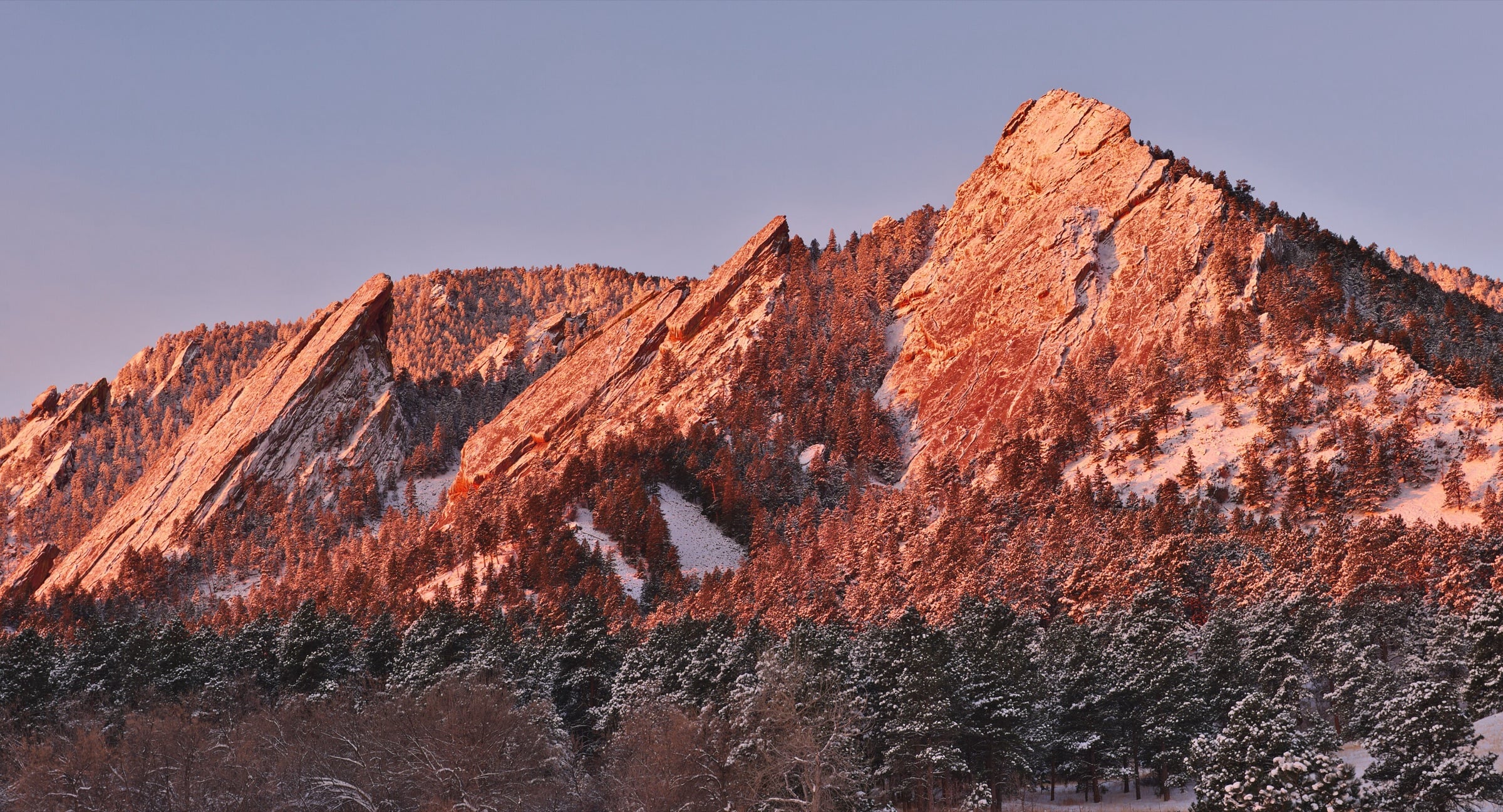
Living in Boulder
Boulder is its own city and the seat of Boulder County, about 25 miles northwest of Denver, where the plains run straight into the Flatirons. Boulder Creek crosses the city from west to east, Baseline Road traces the 40th parallel across the south side, and US 36 is the road most people take to Denver.
Gold camp, county seat, college town
Prospectors led by Thomas Aikins camped at the mouth of Boulder Canyon in late 1858, and gold turned up along Boulder Creek early the next year. Boulder County was created in 1861 with Boulder as its seat, and the city incorporated in 1871. The 1861 legislature also picked Boulder for the state university, and the University of Colorado opened its doors in 1877.
Rules that hold the edges in place
Boulder decided early how far it wanted to grow. A 1959 charter amendment called the Blue Line limits city water service to land below 5,750 feet. Voters approved a sales tax to buy open space in 1967, a 1972 ordinance capped building heights to protect views of the Flatirons, and the 1976 Danish Plan put limits on residential growth. For a buyer, the upshot is that the edge of town isn't moving, so you're choosing among streets that already exist.
Historic districts and the Chautauqua cottages
Boulder has ten local historic districts. Floral Park and Chautauqua came first, in 1978, and Mapleton Hill followed in 1982. West Pearl, Chamberlain, Downtown, Hillside and Highland Lawn came next, and University Place and 16th Street were added in 2006. Designation brings design review, so changes to a house's exterior are judged on how well they fit the district's historic character. If the house you want sits in one of the ten, build that review into the timeline before you plan an addition or a new porch.
Chautauqua is the unusual one. It opened in 1898 as a summer school and lecture series for Texas teachers, and its auditorium and dining hall both went up that first year. Ninety-eight cottages followed between 1899 and 1954, 80 of them before 1915. The city weighed tearing down the auditorium in the 1970s, and a 1978 National Register listing turned that into restoration. The whole 40 acres, including the 14-acre Chautauqua Park, became a National Historic Landmark in 2006.
Pearl Street and the blocks around it
The Pearl Street Mall is four pedestrian blocks of Pearl Street from 11th to 15th, built over 1976 and 1977 and dedicated that August. Many of its buildings are among the oldest in Boulder, and the Boulder County Courthouse on the north side of the 1300 block is still the seat of county government.
Frasca Food and Wine, at 1738 Pearl, holds a Michelin star for its cooking from Friuli Venezia Giulia in northeastern Italy. Just south of the mall at 1770 13th Street, the Boulder Dushanbe Teahouse was a gift from the city of Dushanbe, Tajikistan: Tajik artisans built it there over 1987 to 1990, then it was shipped over, put back together and opened in 1998. Around the corner at 2032 14th Street, the Boulder Theater opened in 1906 as the Curran Opera House, took its current name as a movie house in 1936, and still books touring bands and film nights behind its art deco front.
The creek path, the bus and the highway
The Boulder Creek Path runs 5.5 miles from Boulder Canyon to the Stazio Ballfields just past 55th Street, passing downtown, the Main Library, Civic Area Park and the teahouse along the way.
For Denver, RTD's Flatiron Flyer has run express buses along US 36 since 2016, between Downtown Boulder Station and Union Station, with a stop at the US 36 and Table Mesa park-and-ride. The buses use the highway's express lanes, which are free for buses and carpools while solo drivers pay a toll, and the US 36 Bikeway runs beside the road from Table Mesa to Westminster. Commuter rail hasn't reached Boulder: the B Line opened in 2016 only as far as Westminster. If you plan to ride the bus to work, look for a house within easy reach of Downtown Boulder Station or the Table Mesa park-and-ride.
FAQ
Is Boulder part of Denver?
No. Boulder is its own city and the seat of Boulder County, about 25 miles northwest of Denver.
How do you get from Boulder to Union Station without a car?
RTD's Flatiron Flyer runs express buses along US 36 from Downtown Boulder Station to Union Station, with a stop at the US 36 and Table Mesa park-and-ride.
Does the train go to Boulder?
Not yet. The B Line commuter rail opened in 2016 only as far as Westminster.
Why doesn't Boulder spread farther into the foothills?
The 1959 Blue Line limits city water service to land below 5,750 feet, and the city has been buying open space with a voter-approved sales tax since 1967.
Does Boulder have historic districts?
Yes, ten of them, including Mapleton Hill, Chautauqua, Floral Park and Downtown. Exterior changes there go through design review.
What is Chautauqua?
A summer school for Texas teachers that opened in 1898. Its auditorium, dining hall and 98 cottages sit on a 40-acre site that became a National Historic Landmark in 2006.
Where is the main street?
The Pearl Street Mall, four pedestrian blocks of Pearl Street from 11th to 15th, with the Boulder County Courthouse on the 1300 block.